Table of Contents
- Introduction
- Direct Answer
- Quick Comparison Table
- Deep Meanings & Definitions
- Historical Origin & Etymology
- Pronunciation Guide
- The Technical Differences
- Correct Spelling & Common Typos
- Mnemonic Devices
- Regional Variations
- Singular and Plural Forms
- Grammar Rules
- Synonyms and Antonyms
- Formal vs. Informal Usage
- Illustrative Examples
- Practice Section (15 MCQs)
- Frequently Asked Questions
- Conclusion
Introduction
I have often noticed that even experienced travelers struggle to distinguish between llamas and alpacas. These South American camelids look remarkably similar at first glance. However, understanding their differences is essential whether you are visiting a farm, shopping for wool, or simply curious about these fascinating animals. In this guide, I will help you identify each species with confidence.
Direct Answer
Llamas are larger (about 6 feet tall, 300+ pounds) with long banana-shaped ears, used as pack animals. Alpacas are smaller (about 5 feet tall, 150 pounds) with straight spear-shaped ears, bred primarily for their soft, luxurious fiber .
Quick Comparison Table
| Feature | Llama | Alpaca |
| Size | 5.5-6 feet tall, 250-400 pounds | 4.5-5 feet tall, 100-150 pounds |
| Ears | Long, banana-shaped | Short, straight, spear-shaped |
| Face | Longer snout, less compressed | Shorter, blunter, compressed |
| Coat | Coarse, two layers (soft undercoat, coarse overcoat) | Fine, soft, single coat |
| Temperament | Independent, bold | Gentle, timid |
| Primary Use | Pack animal, livestock guard | Fleece production |
| Herd Behavior | More solitary | Prefers to stay with herd |
Deep Meanings & Definitions
Llama:
A large, domesticated South American camelid used as a pack animal. Llamas are known for their strength, independence, and guard instincts. They have coarse hair, long ears, and are often used to protect flocks of sheep.
Alpaca:
A smaller, domesticated South American camelid bred primarily for its exceptionally soft fleece. Alpacas are herd animals with a gentle, timid temperament. Their fiber is prized globally for making hats, gloves, and sweaters .
Historical Origin & Etymology
Etymology:
- Llama: From Quechua (Indigenous Andean language)
- Alpaca: From Aymara “allpaca” through Spanish
Historical Roles:
- Llamas were domesticated 4,000-5,000 years ago as pack animals
- Alpacas were domesticated for their luxurious fleece
- Both are relatives of wild guanacos and vicuñas
Pronunciation Guide
Llama: /ˈlɑː.mə/ or /ˈlæm.ə/
- UK: “LAH-muh”
- US: “LAM-uh”
- Rhymes with “drama”
Alpaca: /ælˈpæk.ə/
- “al-PAK-uh”
- Rhymes with “attack-uh”
The Technical Differences
The differences go beyond size and appearance:
Skeletal Structure:
- Llamas have longer, more prominent facial bones
- Alpacas have a shorter, more compressed face
Fleece Quality:
- Alpaca fleece is among the softest in the world, with many natural colors
- Llama fleece is coarser, often used for rugs and rope
Behavior:
- Llamas are bold and protective; they spit when annoyed
- Alpacas are sweet, cuddly, and typically stay with their herd
Correct Spelling & Common Typos
Correct:
- Llama (double ‘l’)
- Alpaca (single ‘l’)
Common Typos:
- Lama (missing ‘l’)
- Alpaka (German-influenced spelling)
- Llama (already correct)
- Alpacca (incorrect double ‘c’)
Mnemonic Devices
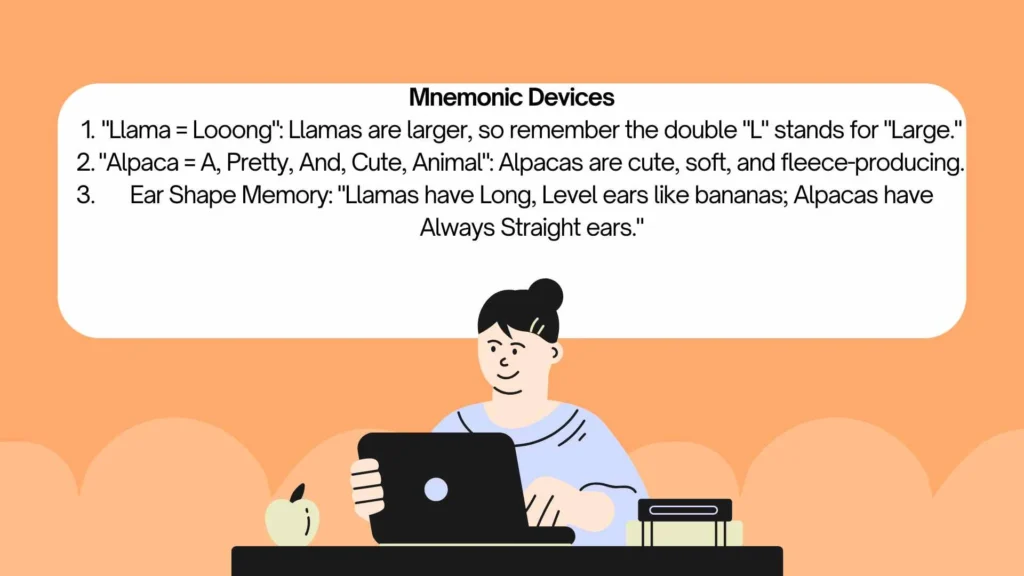
- “Llama = Looong”: Llamas are larger, so remember the double “L” stands for “Large.”
- “Alpaca = A, Pretty, And, Cute, Animal”: Alpacas are cute, soft, and fleece-producing.
- Ear Shape Memory: “Llamas have Long, Level ears like bananas; Alpacas have Always Straight ears.”
Regional Variations
No Regional Variation:
These animal names are consistent across all English varieties:
- American English: Llama, Alpaca
- British English: Llama, Alpaca
- Canadian English: Llama, Alpaca
- Australian English: Llama, Alpaca
Singular and Plural Forms
Singular:
- “The llama carried the load.”
- “The alpaca produced soft fleece.”
Plural:
- Llamas (add ‘s’)
- Alpacas (add ‘s’)
Possessive:
- “The llama’s coat was coarse.”
- “The alpaca’s fleece was soft.”
- “The llamas’ herd was large.”
Grammar Rules
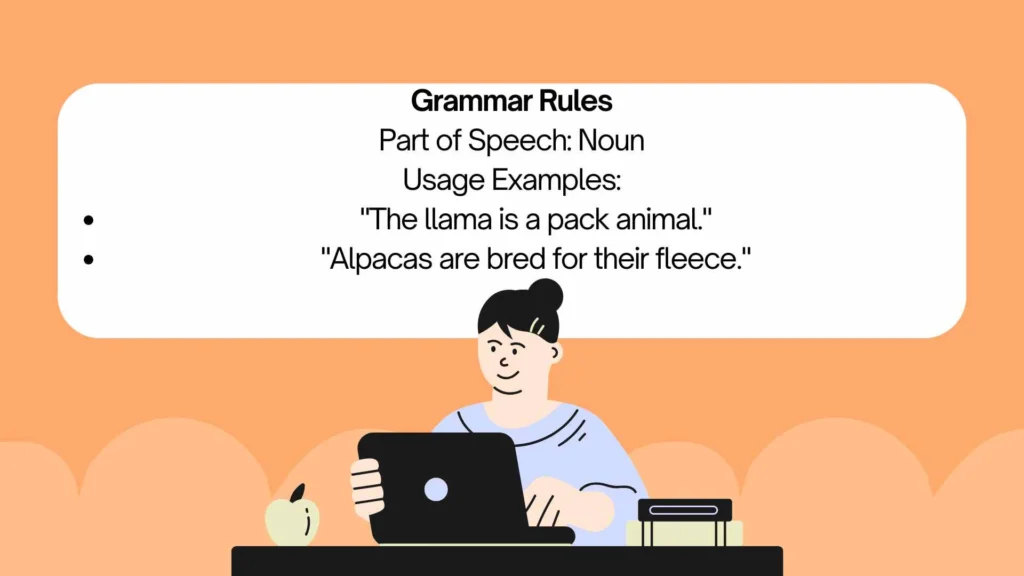
Part of Speech: Noun
Usage Examples:
- “The llama is a pack animal.”
- “Alpacas are bred for their fleece.”
Synonyms and Antonyms
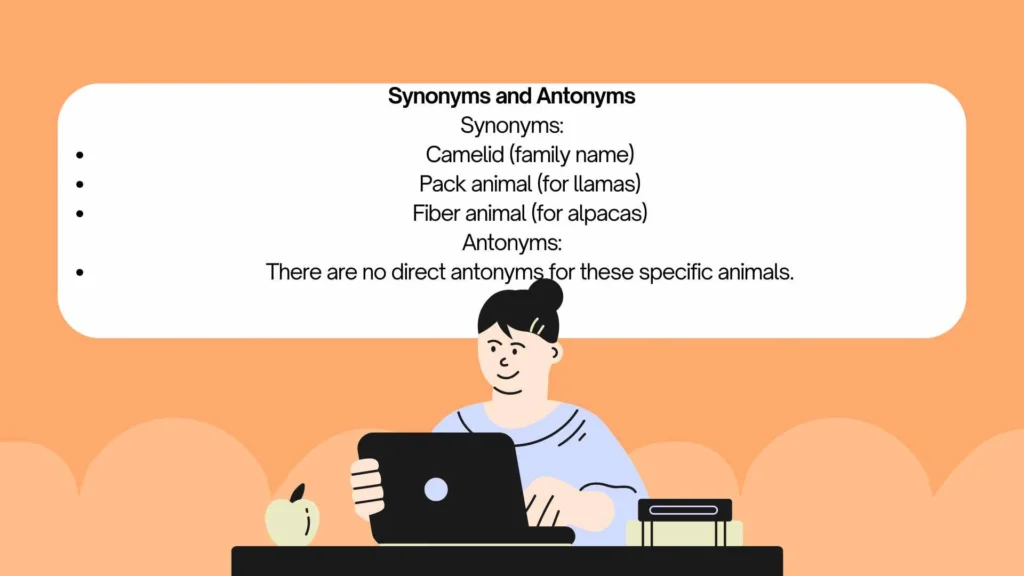
Synonyms:
- Camelid (family name)
- South American camelid
- Pack animal (for llamas)
- Fiber animal (for alpacas)
Antonyms:
- There are no direct antonyms for these specific animals.
Formal vs. Informal Usage
Formal Contexts:
- Scientific papers, agricultural reports, zoological contexts
- “The llama (Lama glama) and alpaca (Vicugna pacos) share the Camelidae family.”
Informal Contexts:
- Everyday conversation, travel blogs, farm visits
- “I can’t tell if that’s a llama or an alpaca!”
Illustrative Examples
- The llama carried supplies across the mountain pass.
- Alpacas are prized for their exceptionally soft fleece.
- The llama had long, curved ears shaped like bananas.
- Alpacas are more timid and prefer staying with their herd.
- A llama can weigh over 300 pounds.
- Alpaca wool is used to make luxurious scarves and gloves.
- The farmer uses a llama to guard his sheep flock.
- The alpaca stood about five feet tall at the shoulder.
- Llamas have a coarser, two-layer coat.
- Alpacas have straight, spear-shaped ears.
Practice Section (15 MCQs)
- Which animal is larger?
- a) Llama
- b) Alpaca
- c) Both
- d) Neither
- What shape are a llama’s ears?
- a) Straight
- b) Banana-shaped
- c) Round
- d) Pointed
- Which animal is bred primarily for fleece?
- a) Llama
- b) Alpaca
- c) Both
- d) Neither
- Alpacas are known for their:
- a) Strength
- b) Soft fleece
- c) Guarding ability
- d) Size
- Which animal has a longer, less compressed face?
- a) Llama
- b) Alpaca
- c) Both
- d) Neither
- Llamas are used primarily as:
- a) Pack animals
- b) Fleece producers
- c) Pets
- d) Riders
- Which animal is more timid?
- a) Llama
- b) Alpaca
- c) Both
- d) Neither
- Alpaca fleece compared to llama fleece is:
- a) Coarser
- b) Softer
- c) Thicker
- d) Less valuable
- What family do both animals belong to?
- a) Bovidae
- b) Camelidae
- c) Equidae
- d) Suidae
- Which animal has a two-layer coat?
- a) Llama
- b) Alpaca
- c) Both
- d) Neither
- Llamas tend to be more:
- a) Herd-oriented
- b) Solitary
- c) Timid
- d) Fleece-producing
- The correct spelling is:
- a) Llama
- b) Lama
- c) Lllama
- d) Yama
- The correct spelling is:
- a) Alpaca
- b) Alpacca
- c) Alpaka
- d) Allpaca
- Which animal has straight ears?
- a) Llama
- b) Alpaca
- c) Both
- d) Neither
- Which animal is typically heavier?
- a) Llama
- b) Alpaca
- c) Both
- d) Neither
Answer Key:
- a
- b
- b
- b
- a
- a
- b
- b
- b
- a
- b
- a
- a
- b
- a
Frequently Asked Questions
Q1: What is the main difference between a llama and an alpaca?
The main differences are size, ear shape, and purpose. Llamas are larger with banana-shaped ears and used as pack animals. Alpacas are smaller with straight ears and bred for fleece .
Q2: Can llamas and alpacas breed with each other?
Yes, they can produce offspring called “huanaco” hybrids, though this is uncommon in commercial settings.
Q3: Which has softer fleece, a llama or alpaca?
Alpacas have significantly softer fleece. Their fiber is among the finest in the world, while llama fleece is coarser and has a two-layer structure .
Q4: Are llamas aggressive?
Llamas are not typically aggressive, but they are more independent and bold than alpacas. They can spit when annoyed and are often used to guard livestock from predators .
Q5: Which animal is more common in the UK?
Alpacas are significantly more common in the UK than llamas. They have become popular for their fleece and for alpaca walking experiences .
Conclusion
I hope this guide has helped you distinguish between llamas and alpacas. Remember the key differences: llamas are larger, have banana-shaped ears, coarse fleece, and serve as pack animals; alpacas are smaller, have straight ears, incredibly soft fleece, and are bred for fiber production . Next time you encounter these fascinating camelids, you’ll know exactly which is which.

Olivia Turner is a lifestyle and contemporary romance writer who focuses on positivity and everyday inspiration. Her stories are light, relatable, and filled with warmth, making them perfect for readers looking for uplifting content. Olivia draws inspiration from daily life and simple joyful moments.
📚 Books:
- Love & Coffee
- Chasing Happiness
- Moments That Matter
 Ethan Walker